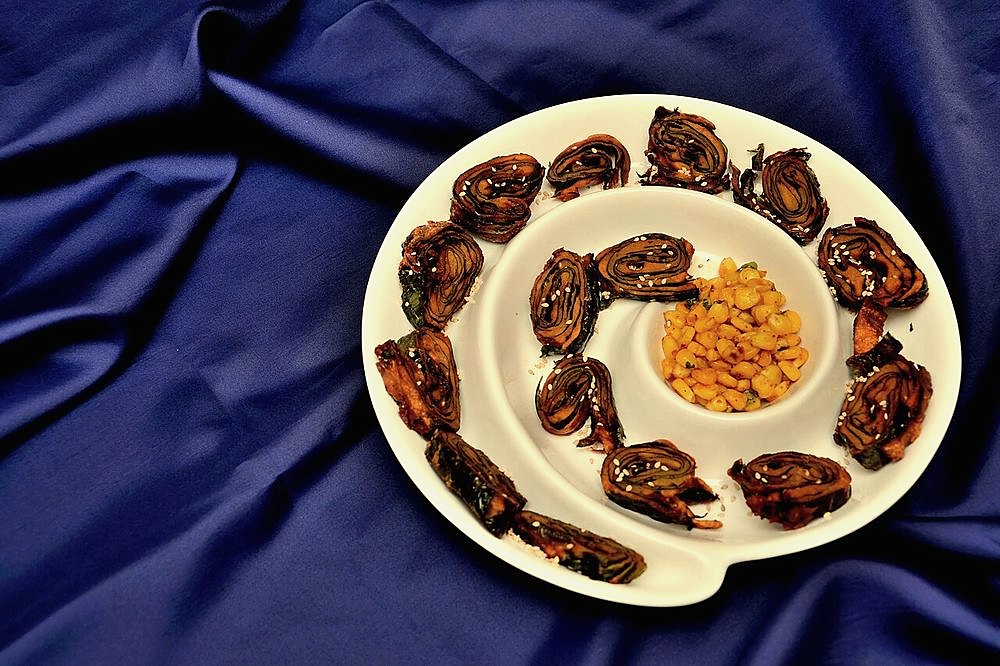
Allergens in Alu Vadi: peanuts, sesame, mustard.
Ingredients
Quantities for 4.
- 12 large leaves (alu paan), the leaves not the corm, stems and thick veins shaved flat Colocasia
- 1.5 cups (150g), sieved Besan
- 2 tbsp Rice Flourhelps the rolls hold when slicedoptional
- 3 tbsp thick pulp Tamarindnot optional. The acid is what stops the leaves itching
- 3 tbsp, grated Jaggery
- 1.5 tsp Chilli Powder
- 1 tbsp Coriander Powder
- 1 tsp Cumin Powder
- 1/2 tsp Turmeric
- 1/4 tsp Asafoetidause compounded-free hing to keep this gluten-free
- 2 tbsp in total Sesame
- 3-4 tbsp, only if needed Wateroptional
- 6 tbsp in total Groundnut Oil
- 1 tsp Mustard Seeds
- 3 tbsp, fresh grated Coconutto finishoptional
- 3 tbsp, chopped Coriander Leavesto finishoptional
- to taste Salt
Cookware
stovetop, steamer, kadhai
Checked against the ingredient list for ten allergens: milk, egg, fish, crustaceans, tree nuts, peanuts, sesame, mustard, soy and gluten. Brands vary, so read the label on anything new to you.
Before you start
- Soak a lime-sized ball of tamarind in 6 tbsp warm water for 20 minutes and squeeze out a thick pulp. Thin, watery tamarind will not do. It is both the flavour and the thing that neutralises the calcium oxalate that makes colocasia itch.
- Wash and dry the leaves completely, then shave the raised veins flat with a knife held almost parallel to the leaf so the rolls fold without cracking.
- The steamed rolls must cool fully, about 30 minutes, before slicing, or they will fall apart.
Method
- Mix the besan, rice flour, tamarind pulp, jaggery, chilli powder, coriander powder, cumin powder, turmeric, asafoetida, 1 tbsp sesame and salt into a thick, spreadable paste, adding water a teaspoon at a time only if it is too stiff.It should be the consistency of soft butter. Spreadable but not runny, or it will slide out of the rolls while steaming.
- Lay a leaf shiny side down, tip pointing away from you, and spread a thin, even layer of paste over the whole surface.
- Lay a second leaf on top facing the opposite way, spread again, and repeat until you have a stack of 3 leaves.Alternating the direction of the leaves gives you the spiral pattern when you slice.
- Fold in both long sides by 3cm, spread paste on the folded edges, then roll from the wide end into a tight cylinder. Seal the end with paste. Make 4 rolls.
- Steam the rolls over rolling water 25-30 minutes, until a knife goes through cleanly and the outside is a dull olive green.
- Cool completely, 30 minutes, then cut into 1.5cm slices with a sharp thin knife.
- Heat 4 tbsp oil in a kadhai and shallow-fry the slices in batches, 2 minutes a side, until the edges crisp and brown.
- Heat the remaining oil, pop the mustard seeds with the remaining sesame, and pour over the fried slices.
- Finish with fresh coconut and coriander and eat warm.If your mouth tingles at all, the tamarind was too weak. A squeeze of lemon over the slices fixes it.
Storage
Steamed rolls keep 4 days refrigerated and freeze for a month whole; slice and fry from chilled. Fried slices are best eaten within a few hours.
Nutrition Good estimate
One serving of Alu Vadi (119 g) is about 505 calories, or 425 calories per 100 g.
Medium protein: 11 g a serving, 9% of the calories
| Per serving119 g | Per 100 g | |
|---|---|---|
| Calories | 505 kcal | 425 kcal |
| Protein | 11.2 g | 9 g |
| Carbohydrate | 51.3 g | 43 g |
| of which sugars | 20.6 g | 17 g |
| Fibre | 7.7 g | 6 g |
| Fat | 29.8 g | 25 g |
| of which saturated | 7.5 g | 6 g |
| of which unsaturated | 20.3 g | 17 g |
Ingredients given to taste count as zero, so the real figures run a little higher. Nearest database match used for asafoetida, jaggery. Estimated from raw ingredients using USDA FoodData Central.
More like this: Vegan Indian recipes · Vegetarian Indian recipes · Gluten-free Indian recipes · Dairy-free Indian recipes · No onion no garlic recipes · Maharashtrian recipes
Times, yields, allergens and nutrition are guidance. Use your own judgement on doneness and on storing. More in About.