Bengali Ghugni
white peas stewed soft with fried coconut slivers and a dust of roasted spice
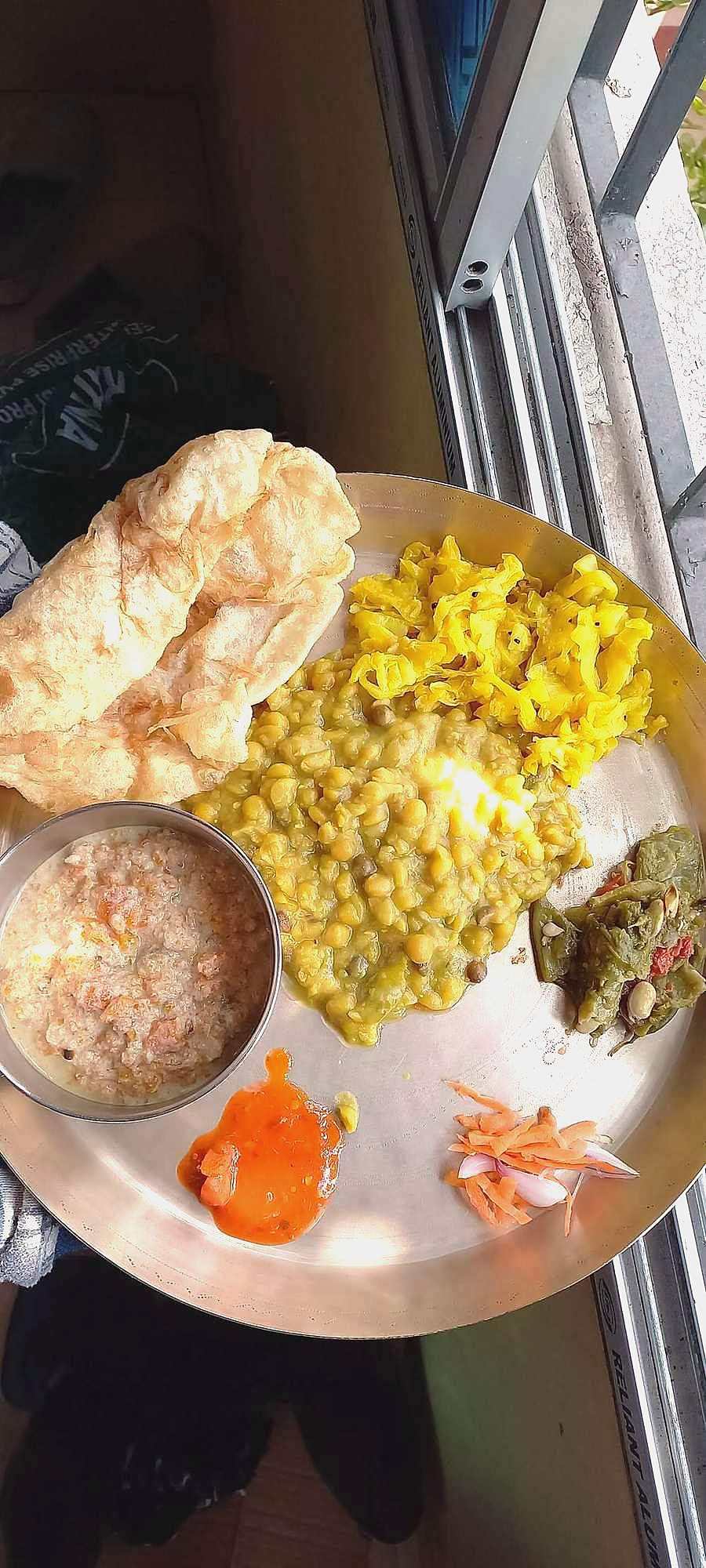
Start the day before. The soaking alone is 12 hr, against 65 min of actual work.
Allergens in Bengali Ghugni: mustard.
Ingredients
Quantities for 4.
- 250g, white, soaked overnight Dried Peas
- 1 large, cut into 1cm dice Potato
- 1 large finely chopped, plus 1/2 finely chopped raw for the top Onion
- 1 tbsp, ground to a paste Ginger
- 1 large, finely chopped Tomato
- 2 tbsp, cut into thin slivers Coconutnarkel kuchi, fried in the oil first
- 1.5 tsp Cumin Seeds1 tsp for the tempering, 1/2 tsp dry-roasted for the finish
- 2 Dried Red Chillione for the tempering, one dry-roasted for the finish
- 1 Bay Leaf
- 1 tsp Turmeric
- 1 tsp Chilli Powder
- 1 tsp Cumin Powder
- 1 tsp Coriander Powder
- 1/2 tsp Garam Masala
- 1 tsp pulp Tamarindor a squeeze of lemon at the tableoptional
- 1/4 tsp Baking Sodain the soaking water, for peas that refuse to softenoptional
- 2, slit Green Chilli
- 3 tbsp, chopped Coriander Leavesoptional
- 1, cut into wedges Lemonoptional
- 1 tsp Sugar
- to taste Salt
- 4 tbsp Mustard Oil
- 600ml Water
Cookware
stovetop, pressure cooker, kadhai
Checked against the ingredient list for ten allergens: milk, egg, fish, crustaceans, tree nuts, peanuts, sesame, mustard, soy and gluten. Brands vary, so read the label on anything new to you.
Before you start
- Soak the white peas overnight in plenty of water with 1/4 tsp baking soda. Old peas can take a full 12 hours and will still be stubborn without it.
- Pressure-cook the drained peas with the turmeric, salt and 500ml water for 3 whistles, then let the pressure fall on its own. They should be soft enough to crush between two fingers but not shapeless.
- Dry-roast 1/2 tsp cumin seeds and one dried chilli until they smell toasty and grind them coarse. This bhaja moshla is sprinkled over at the end and is not optional if you want the real thing.
Method
- Heat the mustard oil in a kadhai to smoking point, then take it off the heat for 30 seconds.
- Fry the coconut slivers over medium heat for about 90 seconds, until they turn light brown at the edges, and lift them out.They colour suddenly at the end. Take them out a shade paler than you want.
- Fry the diced potato in the same oil for 5 minutes until golden, then set aside.
- Add the bay leaf, 1 tsp cumin seeds and one dried chilli and let them crackle for 20 seconds.
- Add the chopped onion and fry for 8 minutes, stirring, until deep gold at the edges.
- Stir in the ginger paste and cook 1 minute, then add the tomato with the chilli, cumin and coriander powders and cook 6 minutes until the oil separates.Mash the tomato against the pan as it goes; you want no pieces left, only masala.
- Tip in the cooked peas with their liquid, the fried potato, the sugar and salt, and the remaining 100ml water.
- Simmer uncovered for 15 minutes, crushing a ladleful of peas against the side of the pan to thicken the gravy.Ghugni should be thick enough to sit on a spoon, not pour off it.
- Stir in the tamarind pulp and slit chillies and cook 2 minutes more, then check the salt.
- Serve in bowls topped with the fried coconut, raw chopped onion, coriander, a dusting of bhaja moshla and garam masala, with lemon wedges alongside.
Storage
Keeps 3 days refrigerated and thickens as it sits. Reheat with 3 to 4 tbsp water and add the coconut, raw onion and bhaja moshla fresh each time.
Nutrition Good estimate
One serving of Bengali Ghugni (386 g) is about 465 calories, or 121 calories per 100 g.
Medium protein: 18 g a serving, 15% of the calories
| Per serving386 g | Per 100 g | |
|---|---|---|
| Calories | 465 kcal | 121 kcal |
| Protein | 17.5 g | 4 g |
| Carbohydrate | 58.1 g | 15 g |
| of which sugars | 7.6 g | 2 g |
| Fibre | 18.1 g | 5 g |
| Fat | 20.1 g | 5 g |
| of which saturated | 4.2 g | 1 g |
| of which unsaturated | 13.3 g | 3 g |
Ingredients given to taste count as zero, so the real figures run a little higher. Nearest database match used for garam masala. Estimated from raw ingredients using USDA FoodData Central.
More like this: Vegan Indian recipes · Vegetarian Indian recipes · Gluten-free Indian recipes · Dairy-free Indian recipes · Bengali recipes
Times, yields, allergens and nutrition are guidance. Use your own judgement on doneness and on storing. More in About.