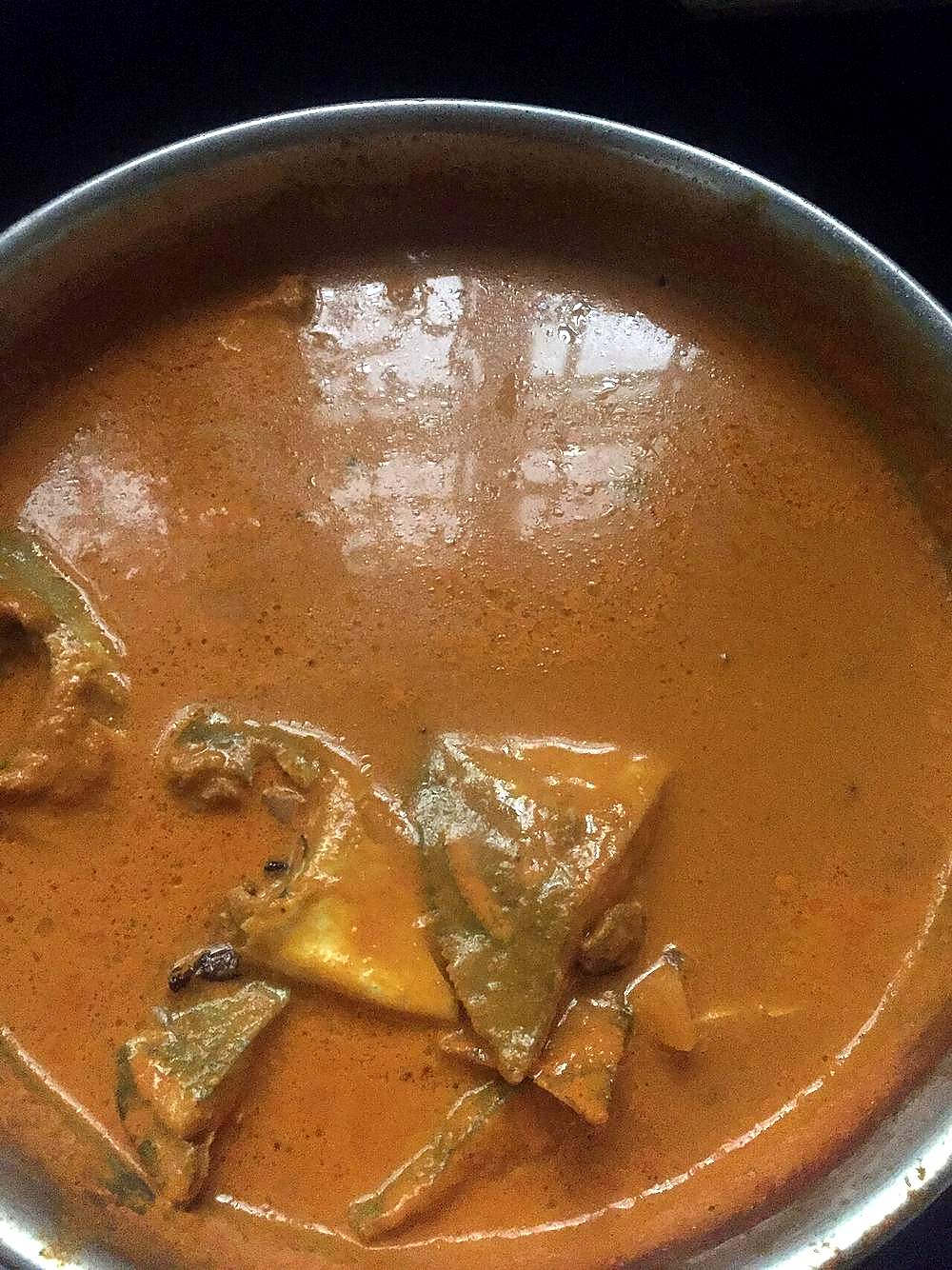
Allergens in Chepala Pulusu: fish, sesame, mustard.
Ingredients
Quantities for 4.
- 600g firm steaks such as seer or kingfish, cut 2cm thick Fisha firm fish that will not fall apart; soft fillets disintegrate in the gravy
- 60g, seedless Tamarind
- 2 medium, finely chopped Onion
- 1 large, chopped Tomato
- 10 cloves, crushed Garlic
- 2cm piece, grated Ginger
- 3, slit Green Chilli
- 2.5 tsp Chilli Powder
- 1 tbsp Coriander Powder
- 3/4 tsp Turmeric
- 1/2 tsp Fenugreek Seedsdry-roasted and powdered. The signature note of a pulusu
- 1 tsp Mustard Seeds
- 1 tsp Cumin Seeds
- 3, broken Dried Red Chilli
- 2 sprigs Curry Leaves
- 1 tbsp Rice Flourslaked in 3 tbsp cold water to thicken the gravyoptional
- 2 tsp, grated Jaggeryoptional
- 4 tbsp Sesame Oil
- a handful, chopped Coriander Leavesoptional
- 1.5 tsp, or to taste Salt
- 500ml Water
Cookware
stovetop, kadhai
Checked against the ingredient list for ten allergens: milk, egg, fish, crustaceans, tree nuts, peanuts, sesame, mustard, soy and gluten. Brands vary, so read the label on anything new to you.
Before you start
- Rub the fish with 1/4 tsp turmeric and 1/2 tsp salt and refrigerate 20 minutes, then let it stand 15 minutes before it goes into the pan.
- Soak the tamarind in 300ml hot water for 25 minutes and extract a thick, dark pulp.
- Dry-roast the fenugreek seeds until deep brown and powder them. Do this first, while the pan is still cool enough to control.
Method
- Heat the sesame oil in a wide kadhai and crackle the mustard seeds, then add the cumin, dried red chillies and curry leaves.
- Add the onion and cook 10 minutes over medium heat until soft and golden brown.
- Stir in the garlic, ginger and green chillies and fry 2 minutes until fragrant.
- Add the tomato and cook 6 minutes until it collapses completely.
- Add the chilli powder, coriander powder and remaining turmeric with 2 tbsp water and fry 2 minutes until the paste darkens to brick red.Keep the heat low here. Chilli powder scorches fast and a burnt pulusu cannot be rescued.
- Pour in the tamarind pulp and 500ml water, add the salt and jaggery, and boil hard for 12 minutes to cook off the raw tamarind edge.Twelve minutes of real boiling, not a lazy simmer. This is what turns sharp tamarind into a rounded gravy.
- Stir in the rice flour slurry and cook 2 minutes until the gravy thickens enough to coat a spoon.
- Slide the fish steaks in in a single layer, spoon gravy over them, and simmer uncovered on low heat for 8 to 10 minutes.Never stir once the fish is in. Tilt and swirl the pan instead, or you will end up with fish flakes in soup.
- Sprinkle over the fenugreek powder, shake the pan once, and take it off the heat.
- Scatter the coriander leaves and leave it to stand at least 2 hours before serving.A pulusu is genuinely better hours later, once the fish has drunk the gravy.
Safe temperatures: Fish is done at 63°C / 145°F, or when it turns opaque and flakes easily. Reheat leftovers to 74°C / 165°F. FoodSafety.gov
Storage
Keeps 2 days refrigerated and tastes best the next day. Reheat gently over low heat without stirring. Do not freeze. The fish turns woolly.
Nutrition Good estimate
One serving of Chepala Pulusu (402 g) is about 409 calories, or 102 calories per 100 g.
High protein: 34 g a serving, 33% of the calories
| Per serving402 g | Per 100 g | |
|---|---|---|
| Calories | 409 kcal | 102 kcal |
| Protein | 33.5 g | 8 g |
| Carbohydrate | 26.9 g | 7 g |
| of which sugars | 11.9 g | 3 g |
| Fibre | 3.8 g | 1 g |
| Fat | 19.3 g | 5 g |
| of which saturated | 2.9 g | 1 g |
| of which unsaturated | 15.0 g | 4 g |
Ingredients given to taste count as zero, so the real figures run a little higher. Nearest database match used for curry leaves, jaggery. Estimated from raw ingredients using USDA FoodData Central.
More like this: Healthy Indian recipes · Gluten-free Indian recipes · Dairy-free Indian recipes · Andhra recipes
Times, yields, allergens and nutrition are guidance. Use your own judgement on doneness and on storing. More in About.