Khichdi Ka Khatta
thin, sharp tamarind sauce poured over khichdi, sour first and sweet after
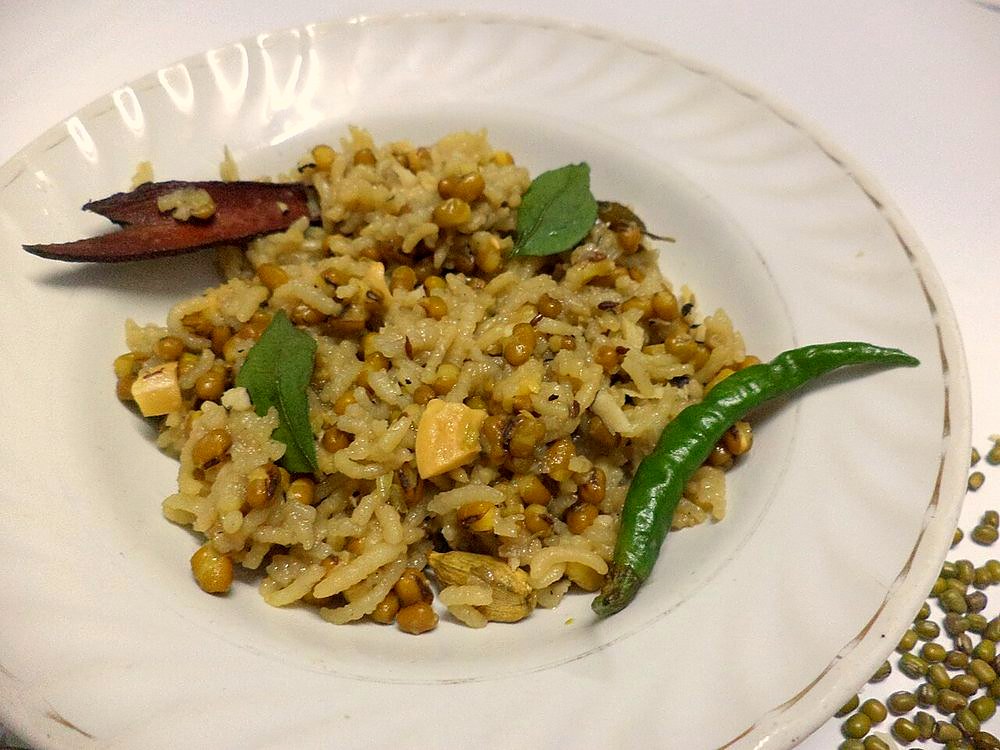
Allergens in Khichdi Ka Khatta: mustard.
Ingredients
Quantities for 4.
- 60g block, soaked in 400ml hot water Tamarind
- 8 cloves, lightly crushed Garlic
- 4, slit Green Chilli
- 2 sprigs Curry Leaves
- 1 tsp Mustard Seeds
- 1/2 tsp Cumin Seeds
- 1/4 tsp Fenugreek Seedsa scant quarter; more turns it bitteroptional
- 3, broken Dried Red Chilli
- 1/4 tsp Asafoetidause compounded-free hing to keep the dish gluten-freeoptional
- 1/4 tsp Turmeric
- 1 tsp Chilli Powderoptional
- 2 tbsp, grated Jaggerybalances the sourness; the khatta should still lead with tamarind
- 3 tbsp Neutral Oil
- 2 tbsp, chopped Coriander Leavesoptional
- to taste Salt
Cookware
stovetop
Checked against the ingredient list for ten allergens: milk, egg, fish, crustaceans, tree nuts, peanuts, sesame, mustard, soy and gluten. Brands vary, so read the label on anything new to you.
Before you start
- Soak the tamarind in hot water for 20 minutes, then squeeze it out thoroughly with your fingers and strain. Do this before anything else.
- Khatta is meant to be pourable, closer to rasam than to chutney. Have extra hot water ready in case it tightens too much.
- Grate the jaggery before you start; a solid lump will not dissolve evenly in a thin sauce.
Method
- Squeeze the soaked tamarind hard in its water, strain through a sieve, and press the pulp to get everything out. Discard the fibres.
- Heat the oil in a pan and pop the mustard seeds, 20 seconds, until they stop jumping.
- Add the cumin, fenugreek seeds and dried red chillies and fry 15 seconds, no longer.Fenugreek burns in seconds and takes the whole pot bitter with it. Count it out.
- Add the asafoetida, curry leaves, crushed garlic and green chillies and fry 1 minute, until the garlic is pale gold and the leaves are crisp.
- Stir in the turmeric and chilli powder off the heat for 10 seconds so they bloom without scorching.
- Pour in the strained tamarind water and 200ml plain water, add the salt, and bring to a boil.
- Simmer uncovered 12 minutes, until the raw edge of the tamarind has gone and the sauce smells rounded rather than sharp.Undercooked tamarind tastes metallic. Twelve minutes is the minimum, and it is the difference between good khatta and puckering acid.
- Stir in the jaggery and simmer 3 minutes more, until dissolved. Taste: sour should lead, sweet should follow.
- Slacken with hot water if it has thickened past pouring consistency, scatter the coriander, and serve hot over khichdi.
Storage
Keeps 5 days refrigerated and the flavour improves after a day. Reheat on the stovetop, thinning with a little hot water as it will have thickened.
Nutrition Good estimate
One serving of Khichdi Ka Khatta (55 g) is about 176 calories, or 323 calories per 100 g.
Low protein: 2 g a serving, 3% of the calories
| Per serving55 g | Per 100 g | |
|---|---|---|
| Calories | 176 kcal | 323 kcal |
| Protein | 1.5 g | 3 g |
| Carbohydrate | 20.7 g | 38 g |
| of which sugars | 13.8 g | 25 g |
| Fibre | 1.6 g | 3 g |
| Fat | 10.8 g | 20 g |
| of which saturated | 1.1 g | 2 g |
| of which unsaturated | 9.1 g | 17 g |
Ingredients given to taste count as zero, so the real figures run a little higher. Nearest database match used for asafoetida, curry leaves, jaggery. Estimated from raw ingredients using USDA FoodData Central.
More like this: Quick Indian recipes (30 min) · Vegan Indian recipes · Vegetarian Indian recipes · Gluten-free Indian recipes · Dairy-free Indian recipes · Hyderabadi recipes
Times, yields, allergens and nutrition are guidance. Use your own judgement on doneness and on storing. More in About.