Jardaloo Ma Gosht
mutton braised with dried apricots until the gravy turns sweet, sour and dark
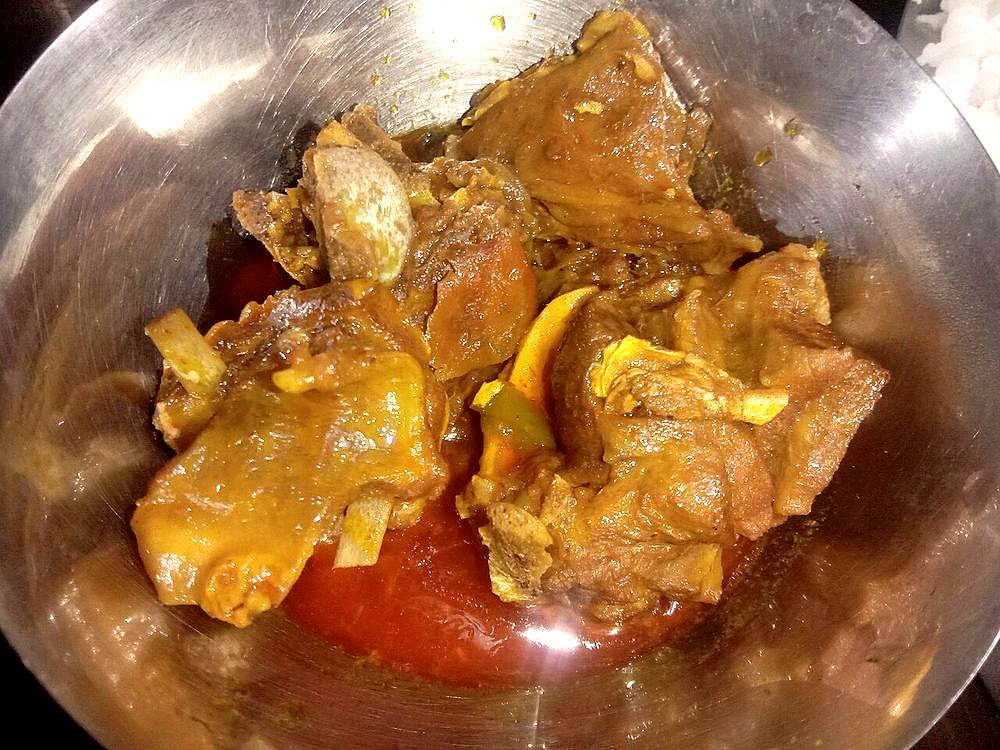
Allergens in Jardaloo Ma Gosht: none of the ten listed below.
Ingredients
Quantities for 4.
- 700g bone-in shoulder, cut into 4cm pieces Mutton
- 14 whole Dried ApricotHunza apricots with the stone in are the traditional choice
- 3 medium, finely sliced Onion
- 1 tbsp paste Ginger
- 1 tbsp paste Garlic
- 2 medium, chopped Tomato
- 1 tsp Chilli Powder
- 1 tsp Kashmiri Chillifor colour without more heat
- 1/2 tsp Turmeric
- 2 tsp Coriander Powder
- 1 tsp Cumin Powder
- 1 tsp Garam Masala
- 1 piece, 3cm Cinnamon
- 4 Cloves
- 1.5 tbsp, grated Jaggery
- 2 tbsp Vinegarcane vinegar if you have it
- 2 medium, cut into fine matchsticks and fried crisp Potatothe sali toppingoptional
- 4 tbsp Neutral Oil
- to taste Salt
- 500ml Water
Cookware
stovetop, pressure cooker
Checked against the ingredient list for ten allergens: milk, egg, fish, crustaceans, tree nuts, peanuts, sesame, mustard, soy and gluten. Brands vary, so read the label on anything new to you.
Before you start
- Soak the apricots in 200ml warm water for 30 minutes. Keep the soaking water. It goes into the gravy.
- Bring the mutton to room temperature for 30 minutes and pat it dry, or it will steam rather than brown.
- If you are making sali at home, soak the potato matchsticks in cold water 15 minutes, dry them thoroughly, then fry in batches.
Method
- Heat the oil in a heavy pan and fry the cinnamon and cloves for 30 seconds, until the cloves swell.
- Add the sliced onion and cook over medium heat until deep brown, 18-20 minutes, stirring so the edges do not catch.This is where the colour of the dish comes from. Brown, never black. Burnt onion turns the whole gravy bitter.
- Stir in the ginger and garlic paste and fry 2 minutes, until the raw smell goes.
- Add turmeric, coriander, cumin, chilli powder and Kashmiri chilli. Fry 40 seconds with a splash of water so they do not scorch.
- Add the mutton and brown it hard for 8 minutes, until the pieces are sealed and the oil separates at the edges.
- Add the tomato and salt, cover, and cook 10 minutes until the tomato collapses into the masala.
- Pour in the water, bring to a boil, then simmer covered 55-65 minutes until the mutton is tender. In a pressure cooker, 4 whistles then 10 minutes on low.
- Add the soaked apricots with their water, the jaggery and the vinegar. Simmer uncovered 12 minutes.Add the apricots this late or they dissolve. You want them whole and plump against the meat.
- Taste and balance: it should read sweet first, then sour, then hot. Adjust with a little more jaggery or vinegar.Balancing is the whole recipe. Do it off the heat, a teaspoon at a time.
- Stir in the garam masala, rest 5 minutes off the heat, and pile the fried sali on top just before serving.Sali goes on at the table. Sat in the gravy it goes soft in two minutes.
Safe temperatures: Whole cuts of mutton, beef and pork are done at 63°C / 145°F, rested 3 minutes. A long braise passes that well before the meat is tender. Reheat leftovers to 74°C / 165°F. FoodSafety.gov
Storage
Keeps 3 days refrigerated and tastes better on day two. Reheat gently with a splash of water; fry fresh sali rather than reheating old.
Nutrition Good estimate
One serving of Jardaloo Ma Gosht (548 g) is about 495 calories, or 91 calories per 100 g.
High protein: 40 g a serving, 33% of the calories
| Per serving548 g | Per 100 g | |
|---|---|---|
| Calories | 495 kcal | 91 kcal |
| Protein | 40.5 g | 7 g |
| Carbohydrate | 42.3 g | 8 g |
| of which sugars | 18.2 g | 3 g |
| Fibre | 6.2 g | 1 g |
| Fat | 18.7 g | 3 g |
| of which saturated | 2.8 g | 0 g |
| of which unsaturated | 14.4 g | 3 g |
Ingredients given to taste count as zero, so the real figures run a little higher. Nearest database match used for garam masala, jaggery, mutton. Estimated from raw ingredients using USDA FoodData Central.
More like this: Gluten-free Indian recipes · Dairy-free Indian recipes · Parsi recipes
Times, yields, allergens and nutrition are guidance. Use your own judgement on doneness and on storing. More in About.