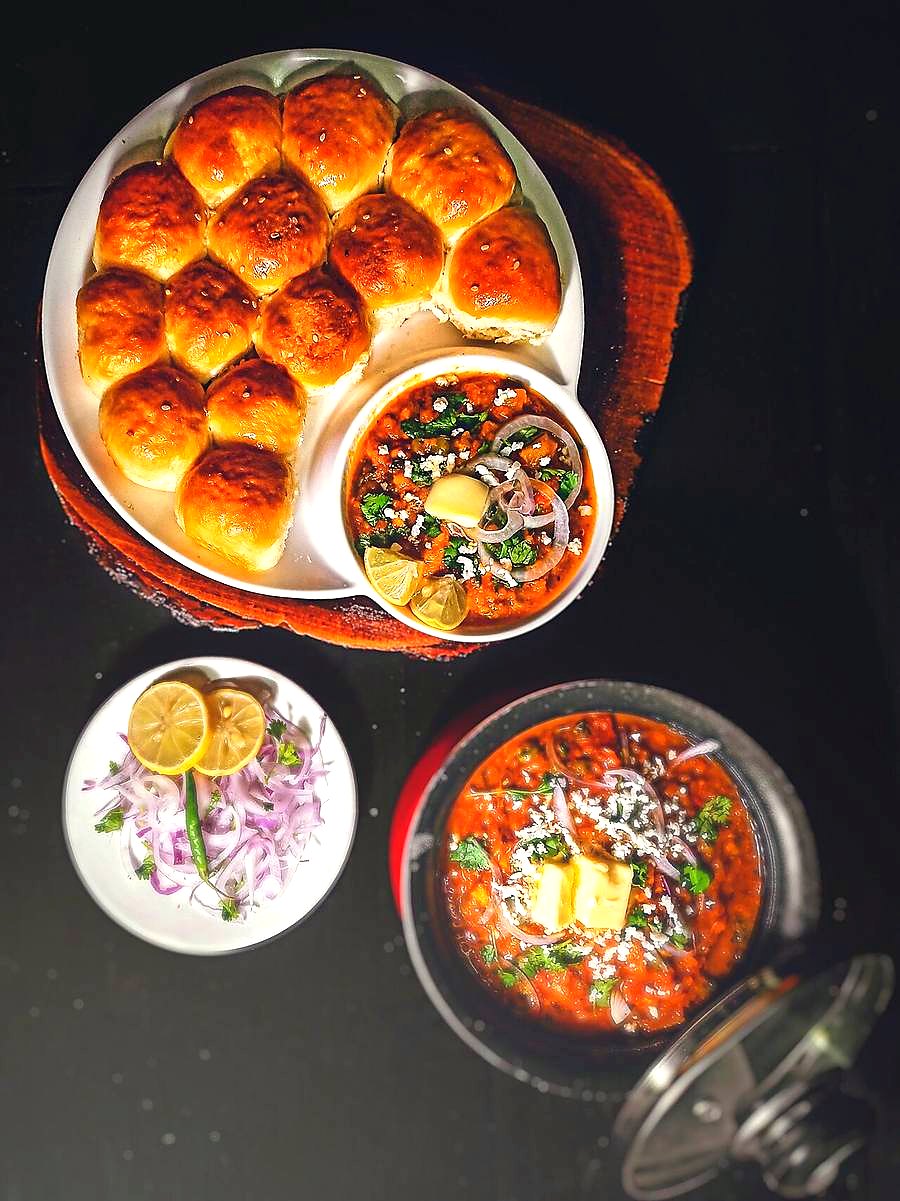
Allergens in Pav Bhaji: milk, gluten.
Ingredients
Quantities for 4.
- 400g (3 medium), peeled and quartered Potato
- 150g, small florets Cauliflower
- 100g Peasfresh or frozen
- 1, finely chopped Capsicum
- 500g (4 large), finely chopped Tomato
- 2 medium, finely chopped, plus 1 raw for serving Onion
- 8 cloves, crushed Garlic
- 1 tbsp, grated Ginger
- 2 tsp Kashmiri Chillicolour without the burn
- 1/2 tsp Chilli Powderfor heat, to tasteoptional
- 2 tbsp Garam Masalastand-in for pav bhaji masala; use ready pav bhaji masala if you have it
- 1 tsp Coriander Powder
- 1 tsp Cumin Powder
- 1/2 tsp Turmeric
- 1/2 tsp Amchuroptional
- 100g Butterhalf into the bhaji, half for the pav
- 8 Pav
- 250ml Water
- 1, cut into wedges Lemonoptional
- 3 tbsp, chopped Coriander Leavesoptional
- to taste Salt
Cookware
stovetop, tawa, kadhai
Checked against the ingredient list for ten allergens: milk, egg, fish, crustaceans, tree nuts, peanuts, sesame, mustard, soy and gluten. Brands vary, so read the label on anything new to you.
Before you start
- Boil the potato, cauliflower and peas together beforehand. They should be soft enough to mash with a spoon.
- Chop the tomatoes as fine as you can; they have to melt, not sit in pieces.
- Weigh the butter out and keep it cold. Pav bhaji is not the place to guess.
Method
- Boil the potato, cauliflower and peas in salted water until completely soft, about 15 minutes, then drain and keep the pan warm.Undercooked cauliflower stays stringy and no amount of mashing will fix it later.
- Melt 40g of the butter on a large tawa or wide pan and cook the chopped onion over medium heat until soft and translucent, about 6 minutes.
- Add the garlic and ginger and fry 1 minute, until the raw edge disappears.
- Stir in the capsicum and cook 3 minutes, just until it loses its squeak.
- Add the tomato and cook down for 10 minutes, pressing it against the pan, until the mass darkens and oil beads at the edges.This is the step everyone shortens. If the tomato still smells sharp, keep going.
- Add the kashmiri chilli, garam masala, coriander powder, cumin powder, turmeric, amchur and chilli powder and fry 1 minute.
- Tip in the drained vegetables and mash them straight into the pan with a potato masher until no lumps remain.
- Pour in the water, season with salt, and simmer 10 minutes, mashing and stirring, until the bhaji is thick and glossy and a spoon leaves a trail.
- Stir 20g of butter through the bhaji off the heat and scatter with coriander.
- Split the pav, griddle them cut side down in the remaining butter with a pinch of the masala until the edges are crisp and red, about 2 minutes.Griddle the pav only when everyone is at the table. They go leathery within minutes.
- Serve the bhaji with the hot pav, raw chopped onion and lemon wedges.
Storage
The bhaji keeps 3 days refrigerated and thickens as it sits; reheat with a splash of water and a fresh knob of butter. Griddle the pav to order.
Nutrition Good estimate
One serving of Pav Bhaji (524 g) is about 530 calories, or 102 calories per 100 g.
Medium protein: 13 g a serving, 10% of the calories
| Per serving524 g | Per 100 g | |
|---|---|---|
| Calories | 530 kcal | 102 kcal |
| Protein | 13.4 g | 3 g |
| Carbohydrate | 67.6 g | 13 g |
| of which sugars | 13.0 g | 2 g |
| Fibre | 11.3 g | 2 g |
| Fat | 25.3 g | 5 g |
| of which saturated | 13.8 g | 3 g |
| of which unsaturated | 9.3 g | 2 g |
Nearest database match used for amchur, garam masala. Estimated from raw ingredients using USDA FoodData Central.
More like this: Vegetarian Indian recipes · Maharashtrian recipes
Times, yields, allergens and nutrition are guidance. Use your own judgement on doneness and on storing. More in About.