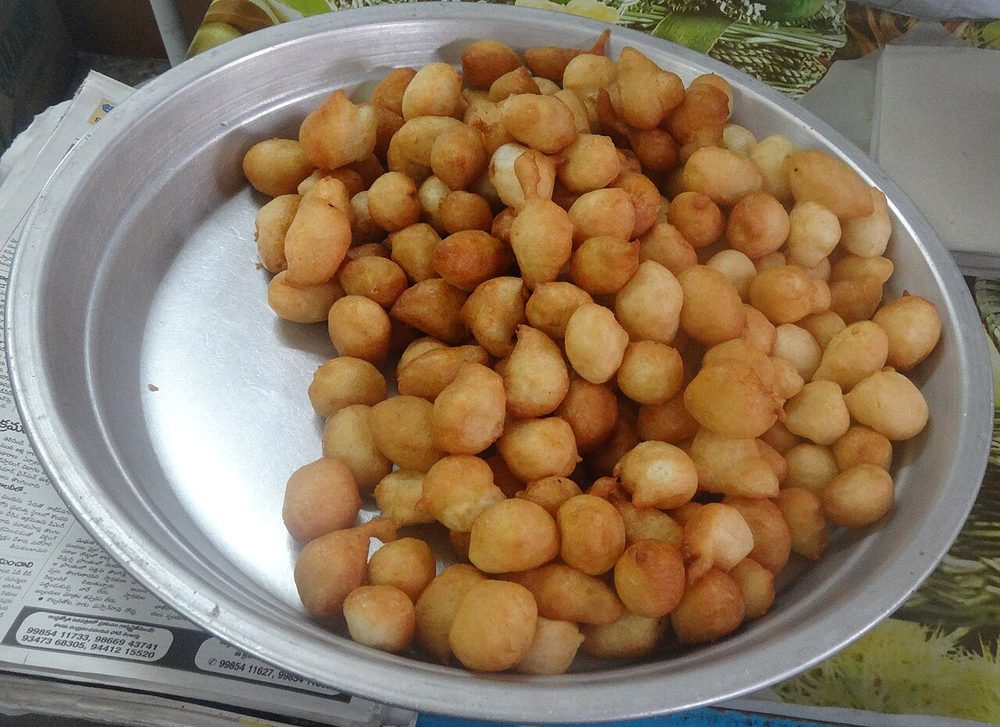
Start the day before. The fermenting alone is 8 hr, against 40 min of actual work.
Allergens in Punugulu: gluten.
Ingredients
Quantities for 4.
- 200g raw, any short-grain Rice
- 70g Urad Dal
- 3 tbsp Ravaadds crispness, but it is wheat semolina. Omit it to keep the punugulu gluten-freeoptional
- 3 tbsp Rice Flour
- 1 medium, very finely chopped Onion
- 4, finely chopped Green Chilli
- 2cm piece, finely chopped Ginger
- 1 tsp Cumin Seeds
- 2 sprigs, finely shredded Curry Leaves
- a small handful, chopped Coriander Leavesoptional
- 1/4 tsp Baking Sodaonly if the batter is young and not properly souroptional
- 800ml, for deep frying Neutral Oil
- 1.5 tsp, or to taste Salt
- as needed for grinding, about 250ml Water
Cookware
stovetop, kadhai, blender
Checked against the ingredient list for ten allergens: milk, egg, fish, crustaceans, tree nuts, peanuts, sesame, mustard, soy and gluten. Brands vary, so read the label on anything new to you.
Before you start
- Soak the rice and urad dal separately for 5 hours, then grind them together to a slightly coarse batter and leave it to ferment 8 to 10 hours somewhere warm.
- The batter should be thicker than dosa batter and smell pleasantly sour. Day-old dosa batter is exactly what most Andhra kitchens use.
- Take the batter out of the fridge an hour before frying; cold batter drinks oil and stays heavy.
Method
- Stir the rice flour and rava into the fermented batter and let it sit 15 minutes to hydrate.This is what makes them crisp rather than bready. Do not skip the resting.
- Fold in the onion, green chillies, ginger, cumin, curry leaves, coriander leaves and salt.Salt the batter just before frying. Added early it thins the batter and the onion weeps.
- Check the consistency: it should drop off a spoon in a thick lump, not a ribbon. Add the baking soda only if the batter tastes flat.
- Heat the oil in a kadhai to 170C. A drop of batter should sink briefly and rise within 3 seconds, fizzing.Too hot and they brown outside while staying raw in the middle. This is the single most common failure.
- Drop in walnut-sized spoonfuls of batter, 8 or 10 at a time, keeping the pan uncrowded.
- Fry 4 to 5 minutes, turning them once they float, until deep golden brown all over and audibly crisp when tapped with the spoon.
- Lift them out onto a rack, not paper. Paper traps steam and softens the bottoms.
- Let the oil come back up to temperature for a minute before the next batch, and serve hot with coconut or peanut chutney.
Storage
Eat within the hour. Punugulu are a fresh-fried snack and go leathery once cool. The batter itself keeps 2 days refrigerated, so fry only what you will eat.
Nutrition Low estimate
One serving of Punugulu (217 g) is about 583 calories, or 269 calories per 100 g.
Low protein: 10 g a serving, 7% of the calories
| Per serving217 g | Per 100 g | |
|---|---|---|
| Calories | 583 kcal | 269 kcal |
| Protein | 9.8 g | 4 g |
| Carbohydrate | 71.4 g | 33 g |
| of which sugars | 1.8 g | 1 g |
| Fibre | 4.1 g | 2 g |
| Fat | 28.7 g | 13 g |
| of which saturated | 3.1 g | 1 g |
| of which unsaturated | 24.2 g | 11 g |
Syrup left in the bowl, or batter that yields more than the stated servings, means the real figures are likely lower. Nearest database match used for curry leaves, urad dal. Estimated from raw ingredients using USDA FoodData Central.
More like this: Vegan Indian recipes · Vegetarian Indian recipes · Gluten-free Indian recipes · Dairy-free Indian recipes · Andhra recipes
Times, yields, allergens and nutrition are guidance. Use your own judgement on doneness and on storing. More in About.