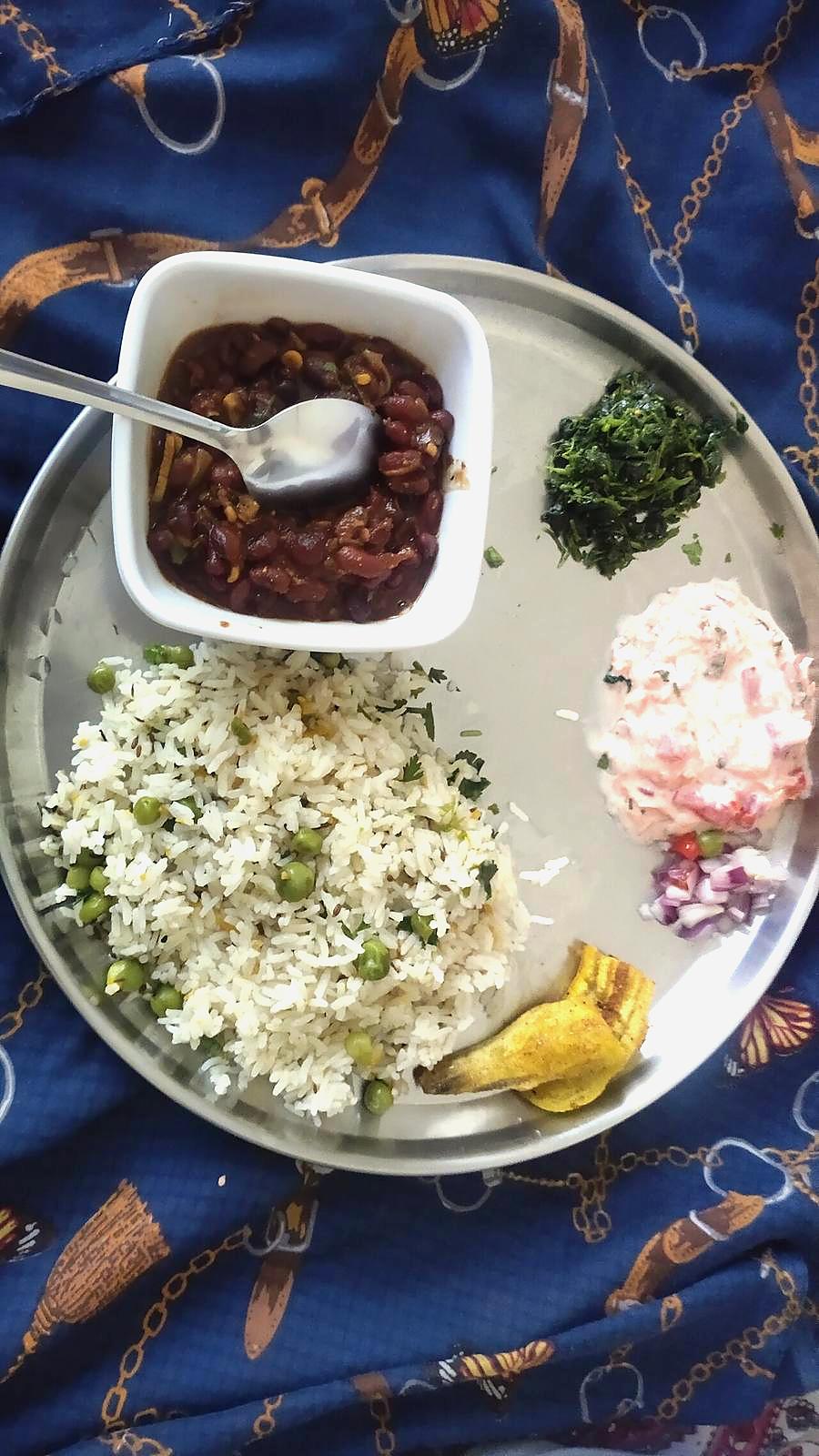
Start the day before. The soaking alone is 8 hr, against 80 min of actual work.
Allergens in Rajma Chawal: none of the ten listed below.
Ingredients
Quantities for 4.
- 1.5 cups (300g), red kidney beans Rajmathe small dark Jammu variety if you can find it
- 1.5 cups (300g) Basmati Rice
- 2 large (300g), finely chopped Onion
- 3 medium (300g), pureed Tomato
- 1.5 inch, grated Ginger
- 6 cloves, minced Garlic
- 2, slit Green Chilli
- 3 tbsp Neutral Oil
- 1 tsp Cumin Seeds
- 1 Bay Leafoptional
- 1/2 tsp Turmeric
- 2 tsp Coriander Powder
- 1 tsp Chilli Powder
- 3/4 tsp Garam Masala
- 1/2 tsp Amchuror a squeeze of lemon at the endoptional
- to taste Salt
- 4 cups for the beans, 3 cups for the rice Water
- 3 tbsp, chopped Coriander Leavesoptional
Cookware
stovetop, pressure cooker
Checked against the ingredient list for ten allergens: milk, egg, fish, crustaceans, tree nuts, peanuts, sesame, mustard, soy and gluten. Brands vary, so read the label on anything new to you.
Before you start
- Soak the rajma in cold water overnight, 8 to 10 hours. A shorter soak means a longer and less even cook, not a bean that never comes good.
- Rinse the basmati until the water runs clear, then soak it 20 minutes and drain.
- Discard the bean soaking water and cook in fresh water. It makes the dish easier on the stomach.
Method
- Pressure cook the drained rajma with 4 cups fresh water, the bay leaf and 1 tsp salt for 20 minutes at full pressure, then let the pressure fall naturally.A cooked bean should squash to a paste between finger and thumb with no resistance.
- While it cooks, heat the oil in a heavy pan and crackle the cumin seeds for 20 seconds.
- Add the onion and fry on medium-high, stirring often, until evenly deep brown. A full 12 to 14 minutes.Pale onions give a thin, pink gravy. Take it to the colour of strong tea.
- Stir in the ginger, garlic and green chillies and fry 2 minutes until the sharpness goes.
- Add the turmeric, coriander powder and chilli powder, stir for 20 seconds, then pour in the tomato puree.Adding the tomato quickly stops the ground spices burning in the dry pan.
- Cook the masala down for 10 to 12 minutes until it darkens and oil separates at the sides.
- Scoop out a ladle of cooked beans, mash them to a paste, and stir that back in with the rest of the beans and their liquid.The mashed beans are what makes the gravy cling to rice instead of running off it.
- Simmer uncovered 20 minutes until the gravy is thick enough to coat the back of a spoon. Add hot water if it tightens too far.
- Meanwhile boil the rice in 3 cups water with 1/2 tsp salt, covered, on the lowest heat for 11 minutes, then rest 5 minutes off the heat and fork through.
- Finish the rajma with garam masala and amchur, taste for salt, and scatter over the coriander.
- Serve the rajma ladled over the hot rice.
Storage
The rajma keeps 4 days refrigerated and improves overnight; reheat with a splash of water. Cook rice fresh. It goes hard in the fridge. The gravy freezes well for 2 months.
Nutrition Medium estimate
One serving of Rajma Chawal (572 g) is about 684 calories, or 120 calories per 100 g.
High protein: 25 g a serving, 15% of the calories
| Per serving572 g | Per 100 g | |
|---|---|---|
| Calories | 684 kcal | 120 kcal |
| Protein | 24.8 g | 4 g |
| Carbohydrate | 120.3 g | 21 g |
| of which sugars | 7.6 g | 1 g |
| Fibre | 15.9 g | 3 g |
| Fat | 12.4 g | 2 g |
| of which saturated | 1.4 g | 0 g |
| of which unsaturated | 10.1 g | 2 g |
Ingredients given to taste count as zero, so the real figures run a little higher. Nearest database match used for amchur, garam masala. Estimated from raw ingredients using USDA FoodData Central.
More like this: Healthy Indian recipes · Vegan Indian recipes · Vegetarian Indian recipes · Gluten-free Indian recipes · Dairy-free Indian recipes · Punjabi recipes
Times, yields, allergens and nutrition are guidance. Use your own judgement on doneness and on storing. More in About.