Saoji Mutton
nagpur's black, oil-slicked mutton curry, hot enough to make your scalp sweat
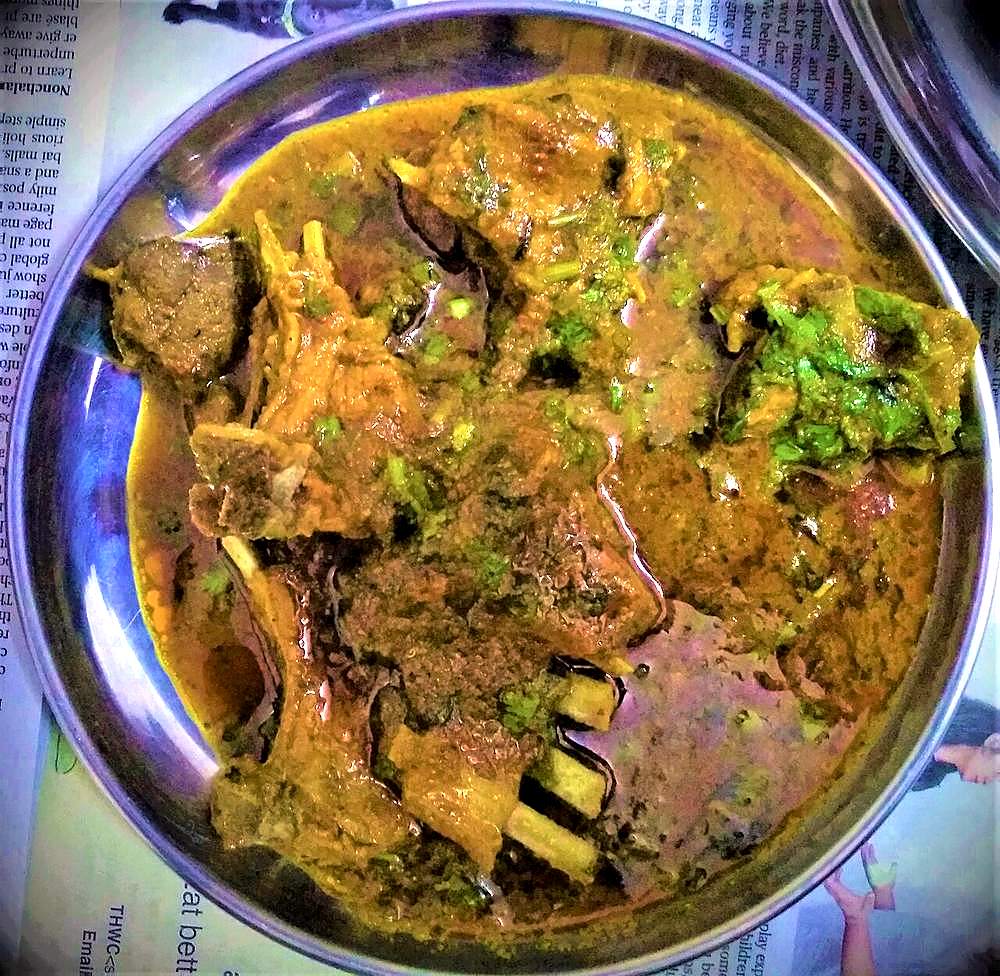
Allergens in Saoji Mutton: peanuts.
Ingredients
Quantities for 4.
- 750g, on the bone, cut in 4cm pieces Mutton
- 4 medium: 2 sliced, 2 for the paste Onion
- 1/2 cup, grated Dried Coconut
- 2 tbsp Poppy Seedsthe saoji thickener
- 1 tsp Stone Flowerdagad phool. Without it this is just a hot curry
- 8, stems removed Dried Red Chilli
- 1 tbsp Black Pepper
- 6 Cloves
- 3cm piece Cinnamon
- 2 Bay Leafoptional
- 2 tbsp Coriander Powder
- 1 tbsp Cumin Seeds
- 15 cloves Garlic
- 4cm piece Ginger
- 1 tsp Turmeric
- 2 tsp Chilli Powder
- 8 tbsp Groundnut Oilsaoji is meant to be oily; the tarri on top is the signature
- 3 cups, hot Water
- 1/2 cup, chopped Coriander Leavesoptional
- to taste Salt
Cookware
stovetop, pressure cooker, kadhai
Checked against the ingredient list for ten allergens: milk, egg, fish, crustaceans, tree nuts, peanuts, sesame, mustard, soy and gluten. Brands vary, so read the label on anything new to you.
Before you start
- Bring the mutton to room temperature and pat it dry 30 minutes before cooking, or it will steam instead of browning.
- Roast and grind the saoji masala the same day. Once it sits overnight the stone flower loses most of its smoke.
- Work in a well-ventilated kitchen. Eight dried chillies in a hot dry pan will clear the room.
Method
- Dry-roast the dried coconut, poppy seeds, stone flower, dried red chillies, black pepper, cloves and cinnamon over low heat for 6-7 minutes, until the coconut is dark gold and the chillies smell smoky.Add the poppy seeds last, in the final 2 minutes. They burn well before the coconut is ready.
- Cool completely, then grind the roasted spices with the coriander powder and cumin seeds to a fine dark powder.
- Blend 2 roughly chopped onions with the garlic and ginger and 3 tbsp water to a smooth paste.
- Heat 6 tbsp oil in a heavy pan. Fry the sliced onions over medium heat 12-14 minutes until deep brown, not black.Deep brown onions carry the colour of this curry. Pull them off the heat one shade lighter than you think.
- Add the onion-garlic-ginger paste and fry 8 minutes, until it stops smelling raw and the oil comes back to the surface.
- Add the mutton, turmeric, chilli powder and 2 tsp salt. Fry on high 8-10 minutes, until the pieces are seared on all sides and no water is pooling.
- Stir in the ground saoji masala and fry 3 minutes on low so it toasts in the oil without catching.
- Pour in the hot water, bring to a boil, then pressure cook 4-5 whistles, or simmer covered 60-70 minutes until the meat pulls from the bone.
- Open, add the remaining 2 tbsp oil and boil uncovered 8-10 minutes until a dark red tarri rises and floats on the surface.That floating layer of spiced oil is what makes it saoji. Do not skim it off.
- Rest 10 minutes off the heat, scatter with coriander, and serve with bhakri or plain rice and raw onion.
Safe temperatures: Whole cuts of mutton, beef and pork are done at 63°C / 145°F, rested 3 minutes. A long braise passes that well before the meat is tender. Reheat leftovers to 74°C / 165°F. FoodSafety.gov
Storage
Keeps 3 days refrigerated and improves overnight as the masala settles into the meat. Reheat on the stove with a splash of hot water; the fat will re-emulsify as it warms.
Nutrition Medium estimate
One serving of Saoji Mutton (499 g) is about 633 calories, or 127 calories per 100 g.
High protein: 44 g a serving, 28% of the calories
| Per serving499 g | Per 100 g | |
|---|---|---|
| Calories | 633 kcal | 127 kcal |
| Protein | 43.7 g | 9 g |
| Carbohydrate | 25.0 g | 5 g |
| of which sugars | 5.9 g | 1 g |
| Fibre | 7.7 g | 2 g |
| Fat | 41.5 g | 8 g |
| of which saturated | 12.1 g | 2 g |
| of which unsaturated | 26.6 g | 5 g |
Ingredients given to taste count as zero, so the real figures run a little higher. Nearest database match used for mutton, stone flower. Estimated from raw ingredients using USDA FoodData Central.
More like this: Gluten-free Indian recipes · Dairy-free Indian recipes · Maharashtrian recipes
Times, yields, allergens and nutrition are guidance. Use your own judgement on doneness and on storing. More in About.